


One of the most common questions business owners ask is:
“How often should I post on social media?”
The answer may surprise you.
It’s not about posting every day.
It’s about posting consistently.
Many businesses start strong, posting multiple times per day for a few weeks, only to disappear for months. Others become discouraged because they believe they need to constantly create content to stay relevant.
In reality, consistency matters far more than volume.
Quality Over Quantity
Social media platforms are filled with content competing for attention.
Posting more often doesn’t automatically mean better results.
A few high-quality posts each week will often outperform daily content that provides little value.
Businesses should focus on creating content that informs, educates, entertains, or builds trust with their audience.
A Realistic Posting Schedule
For most local businesses, a simple schedule works best.
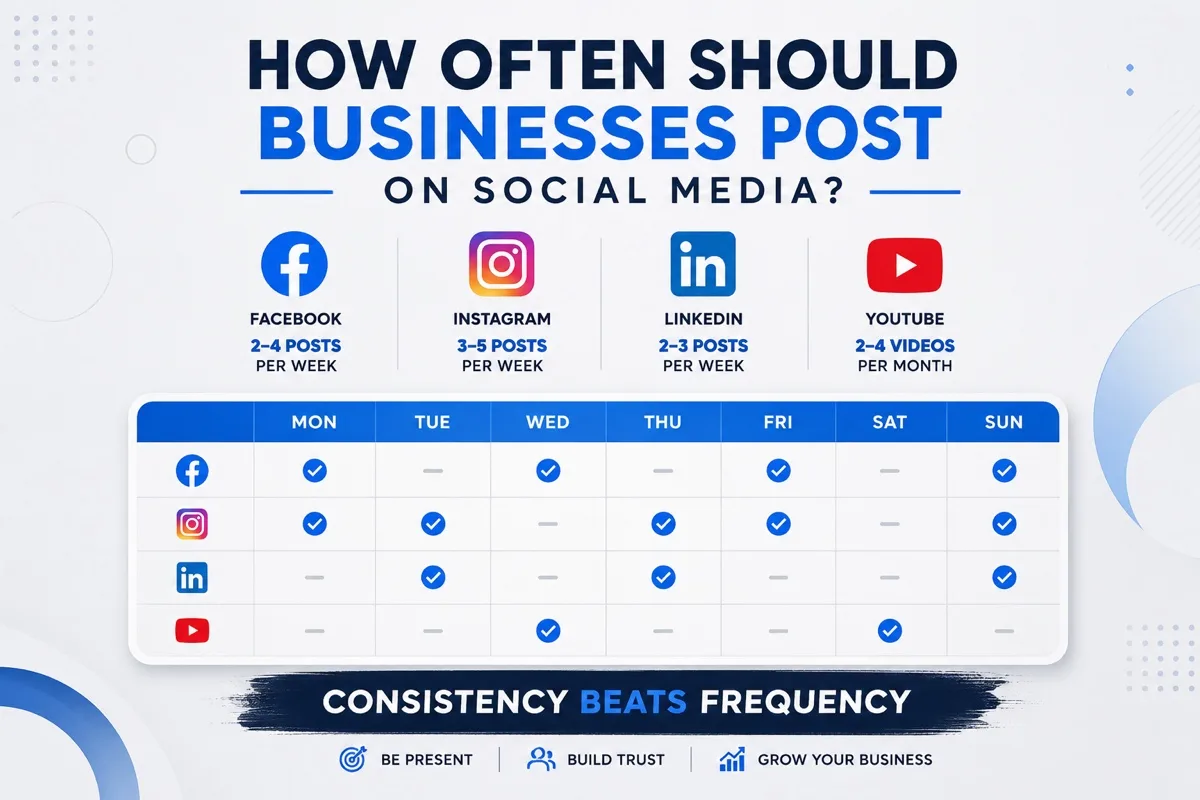
2–4 posts per week
Facebook remains one of the strongest platforms for local businesses, especially when sharing updates, completed projects, community involvement, and customer stories.
3–5 posts per week
Instagram is highly visual and works particularly well for businesses that can showcase products, projects, food, real estate, construction, or behind-the-scenes content.
2–3 posts per week
LinkedIn is ideal for professional networking, company updates, industry insights, and thought leadership.
YouTube
2–4 videos per month
Consistency is more important than frequency. Even one quality video each week can help build an audience over time.
Why Consistency Matters
Social media is often compared to going to the gym.
Going seven days in a row and then quitting for two months won’t produce results.
The same principle applies to marketing.
Businesses that consistently show up stay top-of-mind with potential customers.
People may not need your services today, but when they do, they’ll remember the companies they’ve been seeing regularly online.
What Should Businesses Post?
Many business owners struggle because they think every post needs to be a sales pitch.
It doesn’t.
In fact, some of the most successful social media content isn’t selling anything directly.
Examples include:
- Behind-the-scenes photos
- Project updates
- Before-and-after transformations
- Customer testimonials
- Team introductions
- Community involvement
- Industry tips
- Frequently asked questions
- Company milestones
These types of posts help build trust and keep audiences engaged.
Don’t Chase Every Trend
It’s easy to feel pressured to copy every viral trend.
While some trends can be effective, not every trend fits every business.
The best content often reflects the personality of the company and provides genuine value to customers.
Authenticity usually outperforms imitation.
Engagement Matters More Than Followers
Many businesses focus on follower counts.
However, engagement is often a more important metric.
A smaller audience that interacts with your content regularly is usually more valuable than a large audience that ignores it.
Comments, shares, messages, and conversations often lead to stronger business relationships than follower numbers alone.
The Long-Term Approach
Social media rarely produces overnight success.
The businesses that see the best results are typically the ones that remain active month after month and year after year.
They continue posting.
They continue engaging.
And they continue building trust with their audience.
Over time, those efforts add up.
Final Thoughts
There is no perfect number of posts that works for every business.
The best strategy is one that can be maintained consistently.
For most small businesses, posting a few times each week while focusing on quality content is more than enough to build visibility and strengthen relationships with customers.
At the end of the day, social media isn’t about posting the most.
It’s about showing up consistently, providing value, and staying connected with the people you serve.